


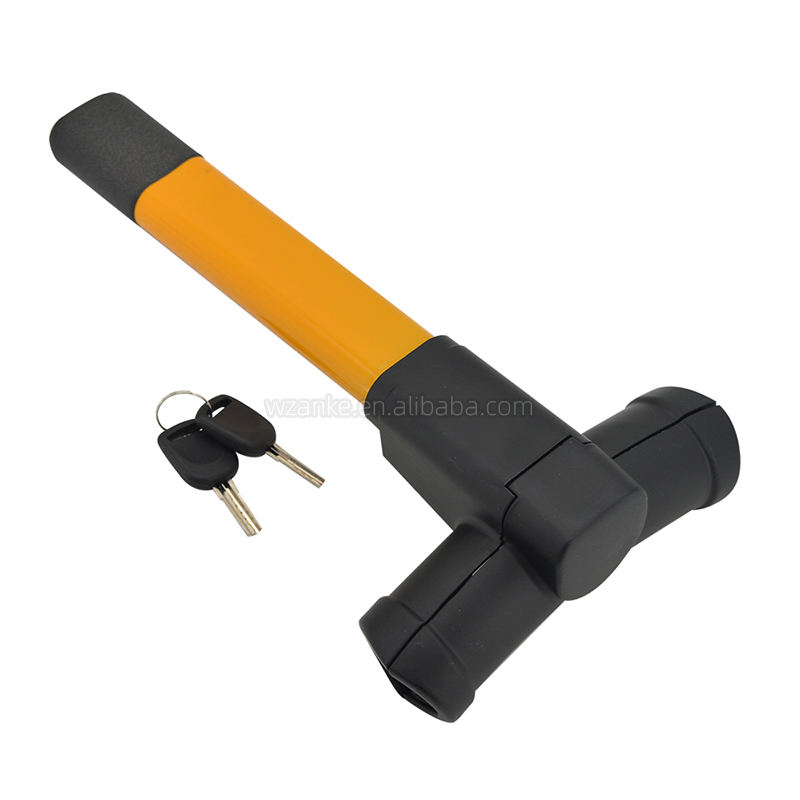
When manufacturing precision mechanical components, most engineers only focus on surface dimensions and appearance smoothness, ignoring invisible structural defects that directly shorten service life and increase later maintenance costs. Irregular shrinkage cavities, uneven internal density, insufficient dimensional stability under high temperature, and poor matching accuracy are long-standing hidden dangers in ordinary die casting products. These problems rarely appear in initial inspection, but gradually cause failure, loosening and fracture after long-term operation under pressure, vibration and temperature changes. Choosing reliable aluminum alloy die casting parts becomes the core solution to avoid continuous production losses and unnecessary after-sales repairs.
Many buyers blindly pursue low unit prices when purchasing die cast components, unaware that inferior raw materials and backward casting processes will amplify potential risks. Low-purity aluminum materials contain excessive impurities, leading to weak corrosion resistance and low pressure resistance. Simple gravity casting technology cannot control internal crystal structure tightly, resulting in air holes and sand holes that cannot be detected by conventional visual inspection. Once assembled into automotive accessories, communication equipment housings and power structural parts, these defects will trigger leakage, deformation and safety hazards. Professional customized die casting from Wuzhou Anke Precision Parts Co., Ltd. adopts standardized smelting and high-pressure die casting processes to fundamentally eliminate such inherent quality flaws.
Dimensional consistency remains one of the most neglected practical demands in batch die casting production. Small-batch trial products often meet tolerance requirements perfectly, while mass-produced parts appear cumulative dimensional deviations. Such deviation will cause difficult assembly, tight fitting gaps, abnormal wear and reduced overall equipment performance. Ordinary factories lack precise mold calibration and full-process dimensional tracking systems, resulting in unstable batch quality that cannot meet automated assembly line standards. Premium aluminum die casting adopts integrated precision molds and multi-stage size detection, ensuring every single part stays within strict tolerance ranges stably for continuous large-scale supply.
Heat resistance and fatigue resistance determine the actual service cycle of die casting parts in harsh working environments. Industrial equipment frequently alternates between high temperature and normal temperature, mechanical parts bear frequent impact and cyclic stress for a long time. Common aluminum die castings are prone to aging softening, cracking and permanent deformation under repeated stress cycles. High-quality aluminum alloy materials adopted in professional die casting have optimized element ratios, stable metallographic structure, outstanding high-temperature mechanical properties, and can maintain stable strength and shape under long-term complex working conditions without premature aging damage.
Surface treatment durability directly affects the overall grade and application life of finished die casting products. Many cheap cast parts have thin and uneven coating layers, which easily peel off, rust and fade after short-term use. Poor surface smoothness also increases friction resistance during operation, raises energy consumption and accelerates component wear. Professional die casting supports customized surface processes including anodizing, powder spraying, polishing and passivation, forming dense and firm protective layers that improve wear resistance, oxidation resistance and aesthetic performance comprehensively while matching diverse industrial application scenarios.
Performance Comparison Between Ordinary Die Casting & Premium Precision Aluminum Alloy Die Casting
| Performance Indicator | Ordinary Aluminum Die Casting | High-Precision Aluminum Alloy Die Casting | Practical Application Impact |
|---|---|---|---|
| Internal Structure Density | Loose, easy to contain air holes & shrinkage cavities | Compact and uniform, no hidden internal defects | Reduces fracture risk under high pressure by 80%+ |
| Batch Dimensional Tolerance | Large fluctuation, unstable consistency | ±0.02mm high precision, stable batch data | Meets automatic assembly and high-precision matching requirements |
| High Temperature Resistance | Easy to deform above 120°C | Stable structure below 200°C | Suitable for engine, power and thermal mechanical parts |
| Corrosion & Oxidation Resistance | Poor, easy to rust in humid environment | Excellent anti-corrosion, moisture-resistant and weather-resistant | Prolongs outdoor and humid working service life greatly |
| Mechanical Fatigue Life | Short, frequent fracture under vibration | Ultra-long cycle resistance, shock-resistant and durable | Lowers equipment downtime and replacement frequency |
Most downstream enterprises overlook matching adaptability between die casting parts and overall equipment systems. Unsuitable material hardness, unreasonable wall thickness design and unreasonable stress distribution will cause coordinated failure of the whole machine even if single part quality passes inspection. Professional customized die casting integrates product structure optimization, mold design, casting parameter adjustment and post-processing finishing according to actual equipment working conditions. It avoids mismatched performance, unreasonable load bearing and installation inconvenience caused by universal standard parts.
Cost calculation of die casting products should focus on full-life cycle expenditure instead of initial purchase price. Low-cost inferior parts save little money in procurement, but bring frequent maintenance, parts replacement, production shutdown losses and after-sales disputes. High-precision customized aluminum die casting has higher one-time cost, but extremely low failure rate, long service life and zero follow-up hidden troubles, which greatly reduces comprehensive operating cost for enterprises in long-term use.
In summary, selecting qualified precision aluminum alloy die casting is not only a choice of parts, but a guarantee for production stability, equipment safety and enterprise benefit improvement. By solving deep-seated problems including internal defects, unstable precision, poor environmental adaptability and short service life, standardized high-quality die casting products perfectly match diversified industrial manufacturing demands, helping enterprises avoid invisible losses and improve overall product competitiveness steadily.